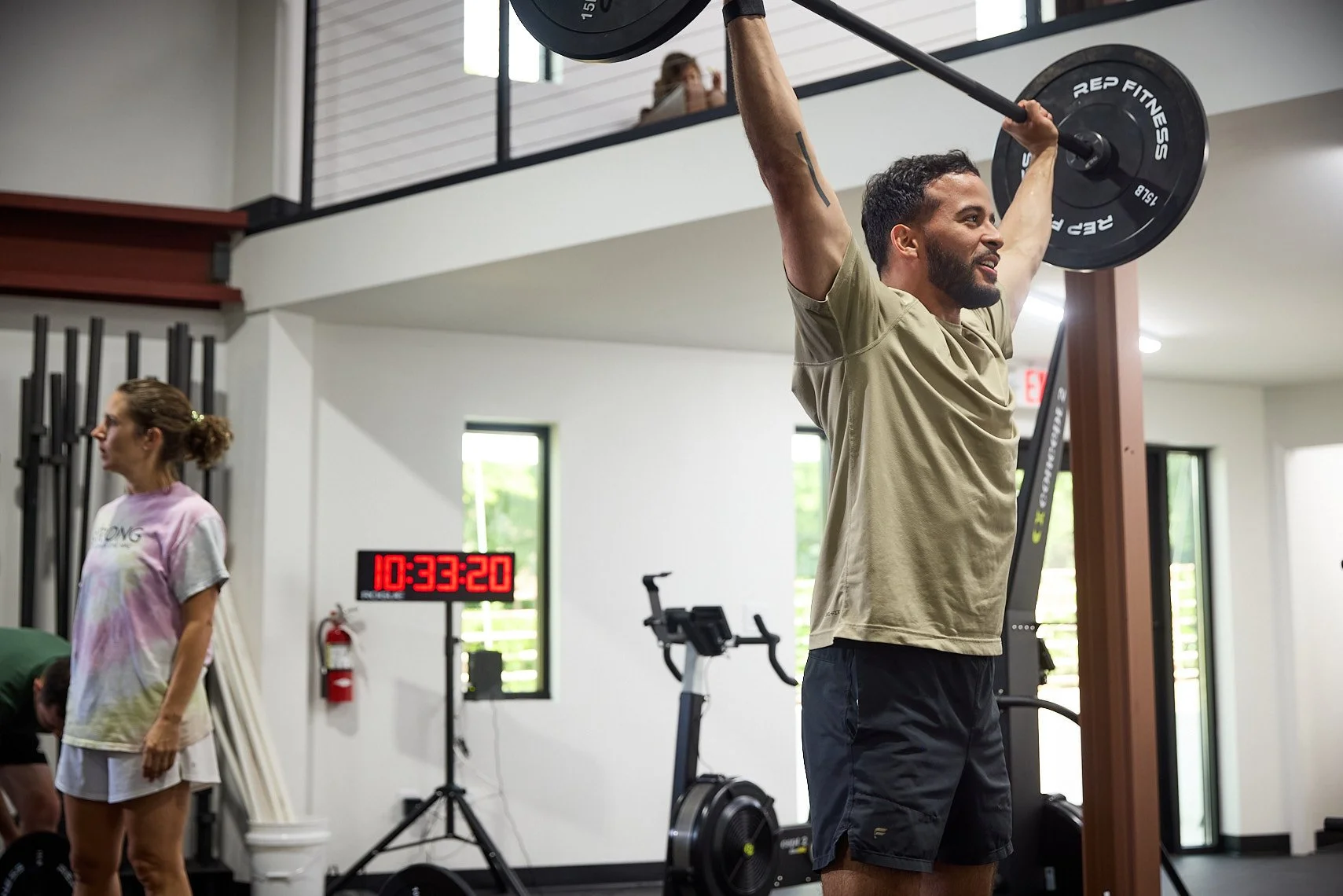
Armorborn
Born for Battle. Born for Power.
What Is Armorborn?
Armorborn is a combat-style functional fitness sport designed to identify the the World's Most Complete Power Athlete. Every event is 2 minutes or less, every rep matters, and every second counts.
This is not about pacing.
This is about maximum output, precision, and execution under fire.
This high-intensity sport and training system is built around short, brutal efforts that test pure explosiveness, skill, and resilience. Athletes compete in mixed-modal events that combine strength, speed, power, agility, skill, and grit—always inside a compressed time domain.
By capping all efforts at ≤ 2:00, Armorborn reveals:
Who can produce the most power
Who can move cleanly under fatigue
Who can stay mentally composed at the redline
It blends:
The urgency of combat sports
The variety of functional fitness
The explosiveness of elite athletics
Are You the World's Most Complete Power Athlete?
Armorborn Classes at CrossFit Full Armor
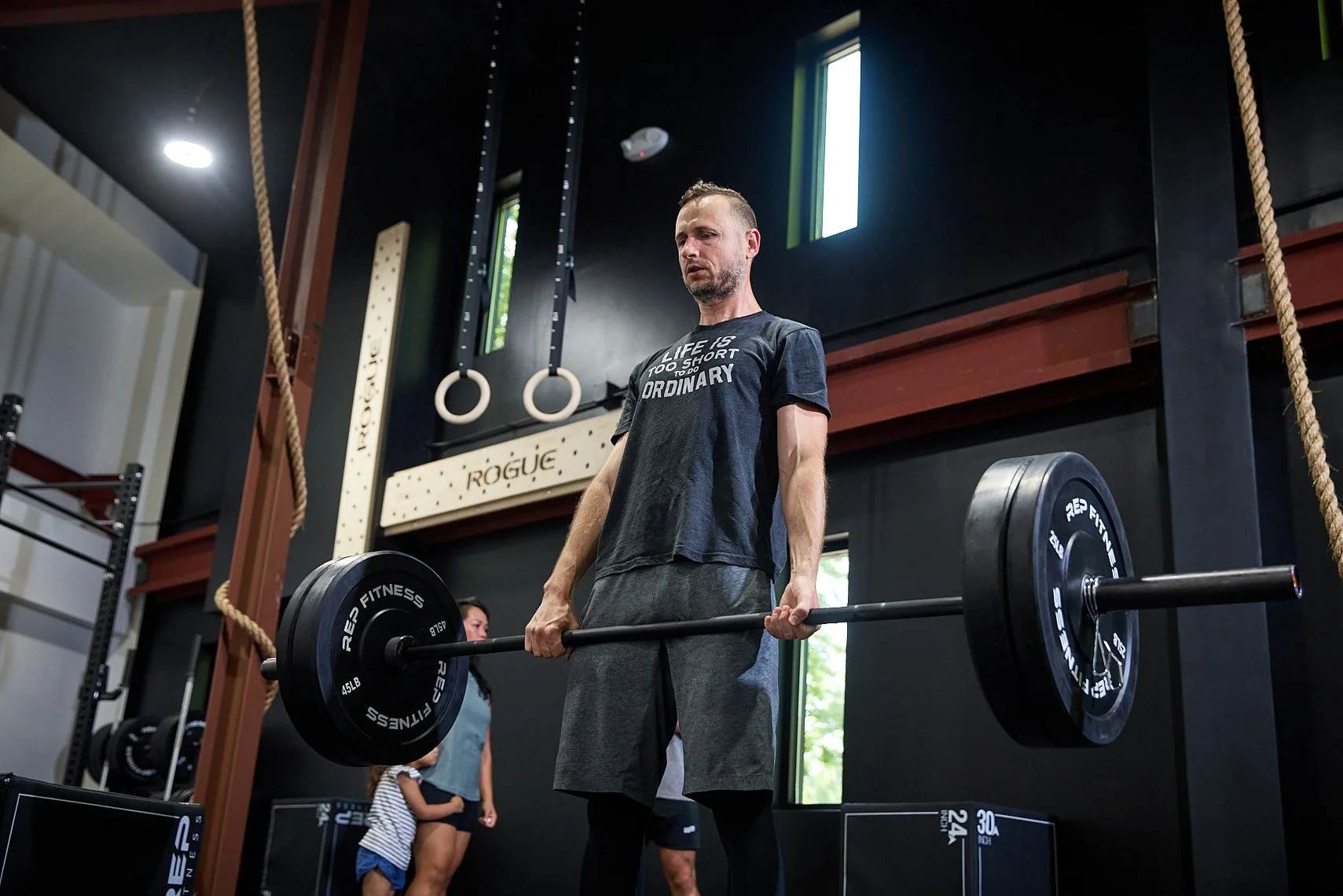
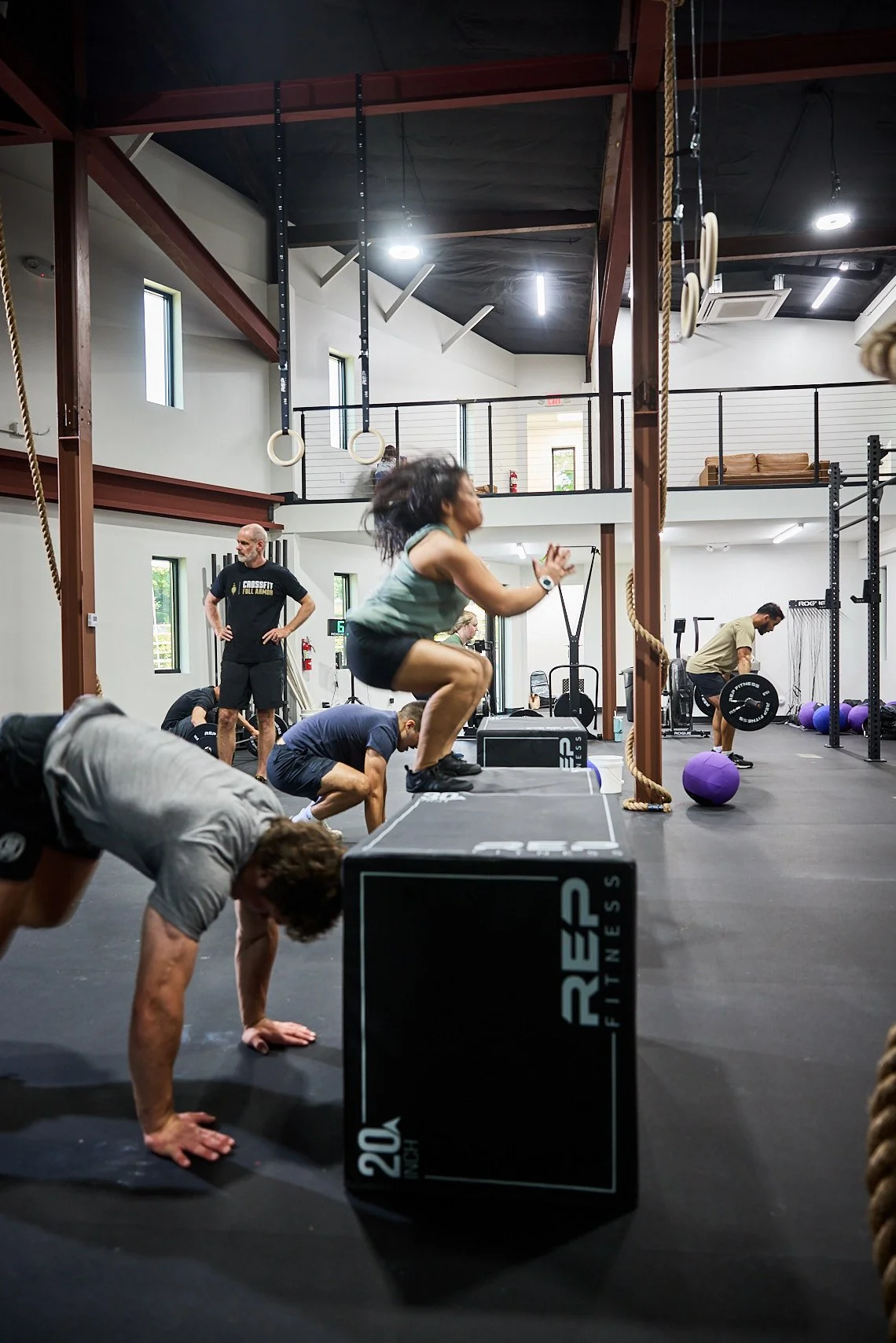
Armorborn isn't just a competition format — it's a daily training class built around the same principles that make the sport work. Every session is fully coached and follows a deliberate structure designed to build the complete power athlete.
Warm-Up Intentional preparation for what's coming — mobility, activation, and movement prep specific to the day's training.
Power Work Jumps, throws, sprints, and explosive drills that train your nervous system to produce maximum force as fast as possible. This is where athleticism is built.
Strength Weightlifting, gymnastics, or a combination of both. Heavy, technical, and coached in depth. This is the foundation everything else sits on.
Speed, Agility and/or Stamina Work Short, maximal efforts under 2 minutes with full recovery between rounds — the heart of Armorborn. Maximum output every interval. No pacing. No grinding.
Accessory Work Targeted movements that address weak points, build durability, and reinforce the positions and patterns trained throughout the session.
Cool-Down Deliberate recovery work to close the session — not an afterthought, but part of the training.
Saturday — Competition Simulation Saturdays are where the sport comes to life. Athletes run through 2-3 workouts structured exactly like a competition day — different movements each event, full recovery between rounds, and the same format you'd face on a real Armorborn competition floor. This is how you prepare to compete. Not by guessing what it feels like — by doing it weekly.
Schedule: Monday, Tuesday, Wednesday & Friday — 4:15pm. Saturday: Competition Simulation — 10:am.
Who it's for: Explosive athletes, CrossFitters looking to build power, field and court sport athletes, anyone wanting to improve body composition, and anyone who wants to train hard and actually recover.
Included with all CrossFit Full Armor memberships at no extra charge.
Elimination Competition Format
64 athletes start. One emerges as the the World's Most Complete Power Athlete.
Round 1: Heats of 64 → Top 48 Advance
1
64 athletes compete in heats of 4-8 athletes
Each athlete completes a 2-minute (or less) workout using 2+ functional movements
Example Workout:
3 power cleans (225/155 lbs)
6 bar muscle-ups
20 double-unders
Sprint 60 yards for finish
Winner of each heat then top times advance to Round 2
Round 2: Top 48 → Top 32 Advance
2
48 athletes compete in heats
New workout with different movements (2+ functional movements, ≤ 2:00)
Winner of each heat then top times advance to Round 3
Round 3: Top 32 → Top 20 Advance
3
32 athletes compete in heats
New workout with different movements (2+ functional movements, ≤ 2:00)
Winner of each heat then top times advance
Round 4: Top 20 → Final 12
4
20 athletes compete in heats
New workout with different movements (2+ functional movements, ≤ 2:00)
Winner of each heat then top times advance
Final 12 → Championship
5
Final 12 workout (2+ functional movements, ≤ 2:00)
Top 8 advance
Championship
6
Championship workout (8 athletes) (2+ functional movements, ≤ 2:00)
Winner crowned the World’s Most Complete Power Athlete
Competition Categories
Compete in your division:
Men's Open
Women's Open
Teens (14-16, 17-18)
Masters (Age Groups: 35-39, 40-44, 45-49, 50-54, 55+)
Scaled Division (modified weights/movements for all genders and age groups)
Team
Points-Based Competition Format
64 athletes start. One emerges as the the World's Most Complete Power Athlete.
Test 1: Heats of 64
1
64 athletes compete in heats of 4-8 athletes
Each athlete completes a 2-minute (or less) workout using 2+ functional movements
Example Workout:
3 power cleans (225/155 lbs)
6 bar muscle-ups
20 double-unders
Sprint 60 yards for finish
Points awarded after each test:
1st place = 1 point
2nd place = 2 points
3rd place = 3 points
...and so on down to... 64th place = 64 points
Lowest cumulative score after all 6 events wins.
Test 2: Heats based on current ranking
2
64 athletes compete in heats
New workout with different movements (2+ functional movements, ≤ 2:00)
Rankings after each test will determine athletes heat placement
Test 3: Heats based on current ranking
3
64 athletes compete in heats
New workout with different movements (2+ functional movements, ≤ 2:00)
Rankings after each test will determine athletes heat placement
Test 4: Heats based on current ranking
4
64 athletes compete in heats
New workout with different movements (2+ functional movements, ≤ 2:00)
Rankings after each test will determine athletes heat placement
Test 5: Heats based on current ranking
5
64 athletes compete in heats
New workout with different movements (2+ functional movements, ≤ 2:00)
Rankings after each test will determine athletes heat placement
Test 6: Heats based on current ranking
6
Championship workout (2+ functional movements, ≤ 2:00)
Athlete with the most total points crowned the World’s Most Complete Power Athlete
Competition Categories
Compete in your division:
Men's Open
Women's Open
Teens (14-16, 17-18)
Masters (Age Groups: 35-39, 40-44, 45-49, 50-54, 55+)
Scaled Division (modified weights/movements for all genders and age groups)
Team
THE Armorborn ORIGIN STORY
Built for the Athletes Who Strike Fast—And Strike Hard
The Problem: No Lane for the Power Athlete
I spent years training CrossFit alongside some of the best—regional competitors, Games athletes, the kind of people who made the sport look effortless.
I wasn't at their level. Not in most workouts.
But every time we programmed something short—something brutal and fast—I won. By a lot.
20-second bike sprints and agility? I'd gap the field.
Max reps couplet in 90 seconds? I'd set the standard.
A 2-minute metcon with weightlifting and high skill? I'd finish while others were still mid-round.
It wasn't that I was better. I just had a different engine.
I was fast, powerful, agile and explosive—but the moment a workout stretched past 2 minutes, I fell apart. My body couldn't handle the volume. The aerobic grind destroyed me. I'd overtrain. I'd break down. I'd watch my performances slip while trying to build a system that didn't fit my physiology.
And I knew I wasn't alone.
There were hundreds—maybe thousands—of athletes out there with the same gift:
Former sprinters who could move massive loads at breakneck speed
Combat athletes who thrived in short, violent bursts
Powerlifters and Olympic lifters who could generate absurd force but had no interest in 20-minute AMRAPs
Field sport athletes—football players, rugby athletes, wrestlers—who were built to dominate for seconds or minutes, not hours
We had no lane.
CrossFit celebrated the aerobic grinder. Endurance sports belonged to the long, slow athlete. Powerlifting stripped away the dynamic. Strongman lacked the skill variety.
Where was the sport for us?
The Decathlon Experiment: Close, But Not Quite
I tried the decathlon for a while. I loved the concept—10 events, 9 of them anaerobic, testing speed, power, and explosiveness across multiple disciplines.
But the sport had limits:
Not enough skill variety (running, jumping, throwing—that's it)
Not enough movement diversity (no pulling, no gymnastics, no mixed modalities)
Too track-specific (didn't translate to functional, real-world athleticism)
The decathlon was built for track athletes. I needed something functional, explosive, and infinitely scalable.
I needed a sport where every event was a test of maximum output—not pacing, not survival, but pure power under pressure.
The Moment Everything Clicked
One day, frustrated with another long CrossFit workout that left me feeling slow and beaten up, I decided to make up my own test.
2 minutes. That's it.
20 wall balls for buy-in. Then max alternating devil's presses in the time remaining.
I set the clock. I attacked.
And something happened.
The intensity was insane. My heart rate spiked immediately. My lungs burned. My shoulders screamed. But I wasn't grinding—I was executing.
Every rep mattered. Every second counted. There was no pacing strategy, no "save something for the end." It was full violence, start to finish.
When the clock hit 2:00, I was destroyed—but in the best way.
I felt alive.
More importantly, I realized something:
This stimulus was different.
It wasn't just "cardio." It wasn't just "strength." It was:
Power production under fatigue
Skill execution at redline
Mental composure when your body is begging you to quit
The ability to recover and do it again
This was anaerobic capacity, explosive strength, and functional skill—all tested in a way that built better athletes without breaking them down.
This was the sport I'd been searching for.
The Realization: This Isn't Just for Me
I started programming more sub 2-minute tests. Different movements. Different rep schemes. Different stimuli.
Toes to rings, double unders, handstand push ups. Cleans and box jumps. biking, muscle-ups and carry’s.
Every time, the same thing happened:
The explosive athletes crushed it.
The people who struggled in 15-minute grinders? They dominated here.
The athletes who could never keep up with the Games-level aerobic machines? They set the standard in these short, brutal tests.
We finally had a lane.
But more than that—this training made us better athletes.
Our power output increased (short bursts = CNS adaptation without overtraining)
Our movement quality improved (you can't survive 2 minutes of bad mechanics)
Our recovery got faster (high rest-to-work ratios = better adaptation)
Our longevity improved (we weren't beating ourselves up with 60+ minute sessions every day)
CrossFit Gave Us the Foundation. Explosive Athlete Gave Us the Test.
I'll say this clearly: I believe every athlete needs a solid GPP program like CrossFit (mixes all energy systems, functional movement patters, physical skills and modalities).
The broad base of fitness, the skill development, the strength foundation—that's non-negotiable.
But not every athlete thrives in the same competition format.
CrossFit rewards the aerobic grinder who can pace through 20-minute chippers and still hit muscle-ups at the end.
Armorborn rewards the athlete who can unleash maximum output in 2 minutes—and do it again and again.
It's not better. It's not worse.
It's a different test for a different athlete.
And the beauty of this sport?
The event possibilities are infinite.
Every event is a new challenge. Every athlete has a chance to shine.
The Bigger Vision: A Sport for the Explosive
Armorborn was born from frustration.
Frustration with not having a lane in the fitness world.
Frustration with overtraining on long, slow work that didn't fit my body.
Frustration with not realizing power athletes are world class in athleticism not fitness
We're just built differently.
We're the sprinters. The fighters. The powerlifters. The jumpers. The throwers. The athletes who strike fast and strike hard.
We don't need 20 minutes to prove ourselves.
Give us 2 minutes. That's all we need.
This Sport Has Infinite Potential
Because here's the truth:
Armorborn isn't limited by geography, equipment, or accessibility.
You don't need snow (like cross-country skiing).
You don't need a track (like the decathlon).
You don't need specialized facilities.
You can preform this sport with basically nothing and a clock. You can add a massive amount of variety with a barbell, a pull up bar and some basic equipment.
That's it.
And because every event is 2 minutes or less, you can:
Run competitions in a single day (6 events or less depending on your field size, full recovery between rounds)
Test infinite movement combinations (strength, gymnastics, mono-structural, odd objects)
Scale to any athlete level (masters, teens, beginners—everyone can compete)
Create a spectator-friendly experience (short, intense, exciting—like watching a fight)
This is a sport that can grow anywhere.
Who This Sport Is For
Armorborn is for the athlete who:
Loves short, intense efforts (not 30-minute grinders)
Thrives under pressure (when the clock is ticking and every rep matters)
Values power and skill over pacing (you can't fake explosiveness)
Wants to train hard without overtraining (2-minute efforts = high stimulus, low volume)
Enjoys variety (every event is different, infinite movement combinations)
This is for the combat athlete. The sprinter. The jumper. The lifter. The explosive CrossFitter who never quite fit the mold.
This is for you.
The Final Word
Armorborn started as a personal experiment—a way to test myself in a format that actually fit my body.
But it became something bigger.
It became a sport for the athletes who were tired of being told they weren't "fit enough" just because they couldn't pace through 20-minute workouts.
It became a training system that builds better athletes without destroying them.
It became a competition format that rewards power, precision, and poise—not just survival.
Armorborn isn't about pacing.
It's about who can strike hardest—and recover to do it again.
It's about finding your lane and owning it.
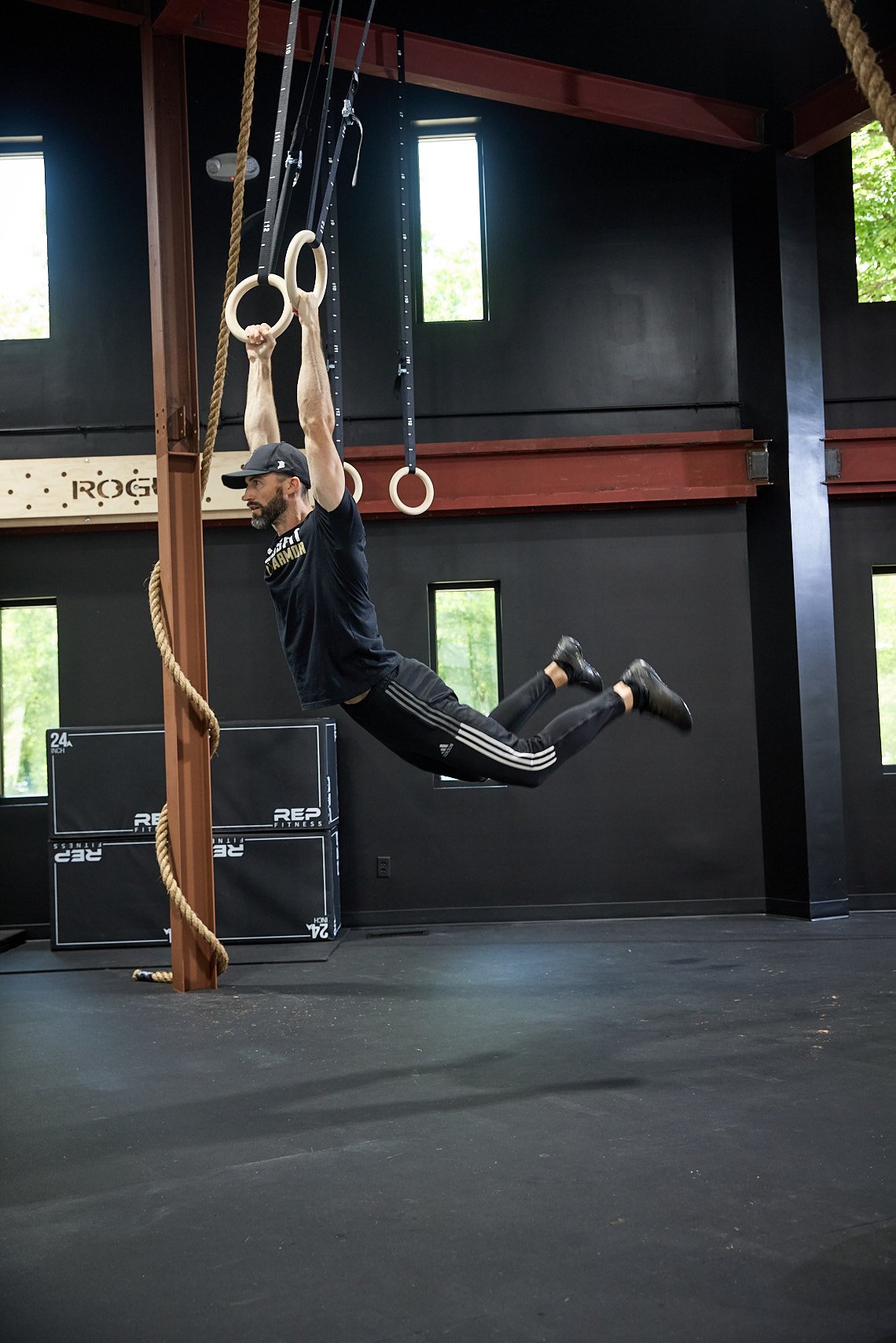
Rules/Test Examples
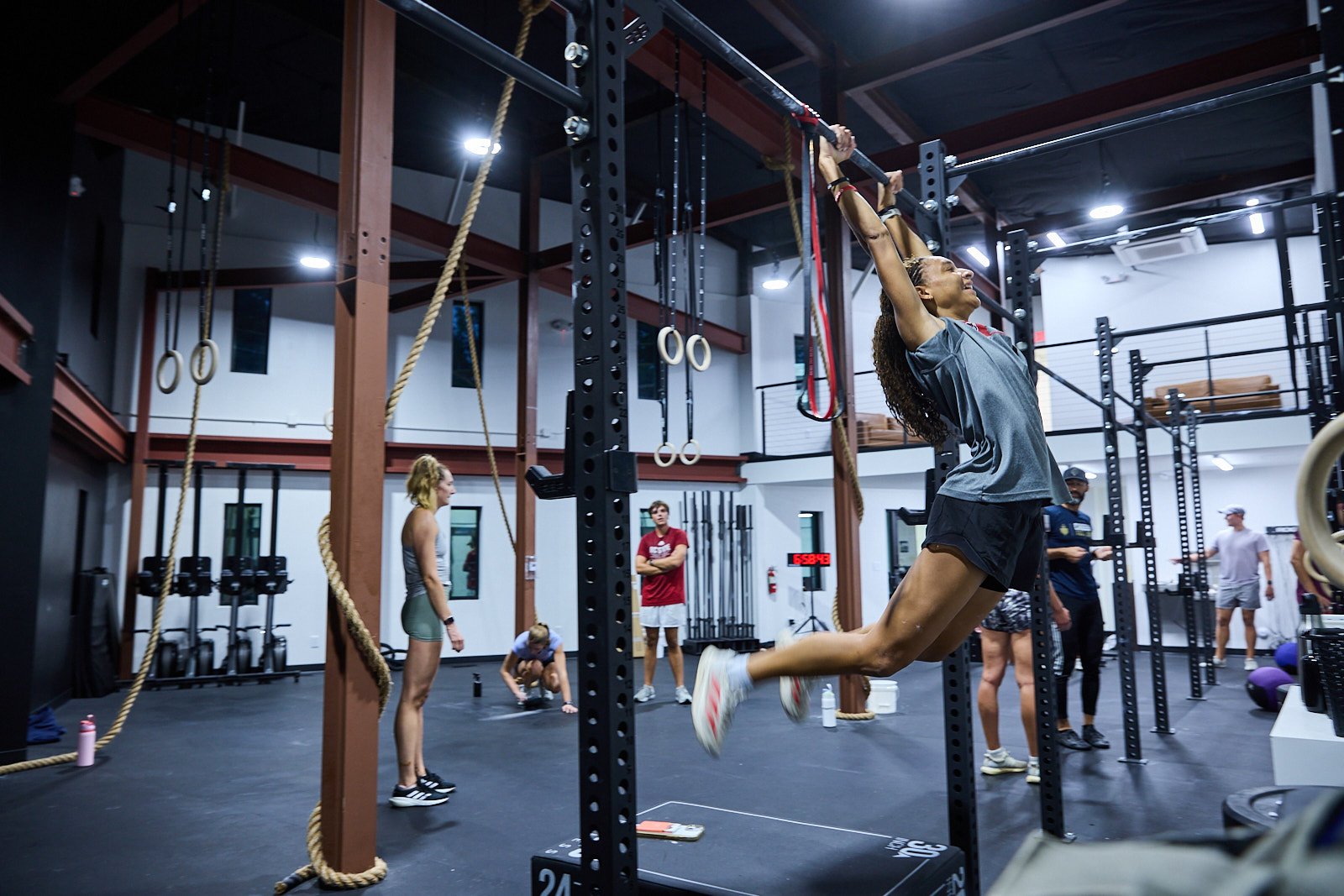
Race Setup/Rules
Each test muse be under 2:00
Tests must have at least 2 functional movements
Each test is for time
Always a clear finish line that has to be crossed. Race can finish with a sprint, lunge, carry, etc…
EVENT EXAMPLES (Each Round = New Workout)
Round 1 (round of 64) Example:
5 deadlifts (315/205 lbs)
10 toes-to-bar
15 wall balls (30/20 lbs, 10/9’)
50-yard sled push (200/140 lbs) to finish
For time, 1:30 cap
Round 2 (round of 32) Example:
20 alternating dumbbell snatches (50/35 lbs)
15 burpee box jump-overs (24/20")
100m sprint
For time, 1:15 cap
Round 3 (round of 16) Example:
10 thrusters (135/95 lbs)
10 cal row
10 thrusters
10 cal row
20yd bear hug carry (100/70 lbs) to finish
2:00 cap
Round 4 (Quarterfinals) Example:
3 cleans (205/145 lbs)
6 bar muscle ups
9 cleans
12 chest-bar-pull-ups
15 cleans
18yd farmers carry (120/85 lbs per hand) to finish
2:00 cap
Round 5 (Semifinals) Example:
20 cal echo bike
10 cal ski
30yd overhead walking lunge (45/35 lb plate) to finish
1:30 cap
Finals Example:
1 squat snatch (225/155 lbs)
1 leg less rope climb
10yd handstand walk
10yd sled pull (300/210 lbs)
200m run to finish
For time, 2:00 cap
TEST FORMATS (Workout Types)
Every Armorborn workout is built on three non-negotiable rules:
Under 2 minutes. Finish line. For time.
That's it. Everything else is a variable.
The number of movements, the emphasis, the equipment, the rep scheme — all of it changes. Some tests are pure strength with a sprint finish. Some are skill-based with a carry to the line. Some are chipper style, some are ascending, some will surprise you the morning of. You won't know exactly what's coming and that's the point.
What you will always know is this — the clock is running, there is a finish line, and the first person to cross it wins.
Armorborn doesn't test one thing. It tests everything. The workout format is deliberately unpredictable because real strength isn't specialized — it's complete. The only way to win every round is to have no weakness.
If you're fast but not strong, you'll survive until you don't. If you're strong but not fast, the finish line will find you out. The athlete who wins Armorborn didn't just train hard — they trained for everything.
Under 2 minutes to prove it. One finish line to decide it.
Penalties
Divisions
Elite
Masters (50+)
Teens (14-18)
Intermediate
Beginner
Team
ATHLETE PROFILE
Who thrives in Armorborn?
High power-to-weight ratio
Anaerobic dominant engine
High-skill efficiency
Unbreakable mindset
Fast recovery between bouts
WHY Armorborn IS DIFFERENT
Short time domains protect the nervous system
High rest ratios prevent chronic fatigue
Ideal for fast-twitch, power-dominant athlete
Maximizes performance without sacrificing longevity
This is intensity with intention.
WHO TRAINS WITH Armorborn
Field & court sport athletes
Combat & grappling athletes
Olympic & functional fitness athletes
Sprinters and explosive track athletes
It trains:
Fast decisions under fatigue
Precision at high heart rates
Recovery between maximal efforts
More About Armorborn
-
Physiologically:
Short time domains (≤2:00) protect your central nervous system and allow faster recovery
High rest-to-work ratios (1:5 to 1:12) preserve maximum power output across all rounds
Anaerobic focus builds explosiveness without aerobic interference
Movement quality stays high—you never reach "sloppy fatigue"
Sustainable long-term (low volume, high intensity = less wear and tear)
Psychologically:
Fast, exciting, spectator-friendly (no watching someone pace for 15 minutes)
Accessible to power-dominant athletes (sprinters, fighters, lifters)
Clear progression (advance or you're out—instant feedback)
-
Single-day elimination tournament:
64 athletes start in heats of 4-8 athletes
Round 1: All 64 compete (new workout, ≤2:00) → Heat winners and top times advance
Round 2: 48 compete (new workout, ≤2:00) → Heat winners and top times advance
Round 3: Top 32 compete (new workout) → Heat winners and top times advance
Round 4: Top 20 compete (new workout) → Top 12 advance
Semifinals: Top 12 compete (new workout) → Top 8 advance
Finals: Championship round (new workout) → Winner crowned
Divisions: Men's Open, Women's Open, Masters (age groups), Scaled
Rest between rounds: 8-20 minutes (full recovery to preserve max power)
-
Armorborn is built for a specific athlete: fast, powerful, and explosive.
While CrossFit, HYROX, Spartan, and other functional fitness sports test broad capacity across long time domains, Armorborn exclusively tests maximum power output in 2 minutes or less.
The Key Differences:
CrossFit rewards the aerobic grinder who can pace through 15-30 minute workouts and still hit muscle-ups at the end. If you dominate short WODs but fall apart after 5 minutes, CrossFit isn't built for you.
HYROX is a hybrid endurance race (60-90 minutes) that favors road runners with moderate strength. It's aerobic-dominant with functional movements mixed in.
Spartan/OCR tests trail running endurance and obstacle efficiency over 30-120 minutes. It's built for outdoor endurance athletes who can climb and carry.
Armorborn is different.
Every event is 2 minutes or less. No pacing. No aerobic grind. Just maximum output, precision, and execution under fire.
-
Scaled division: Yes.
Scaled workouts use lighter weights, reduced skill requirements, and modified movements—but still maintain the ≤2:00 time cap and explosive nature of the sport.
However: Armorborn is competition-first, not "fitness for health." Athletes should have:
Basic movement competency (squat, deadlift, press, pull-up)
Some gymnastics capacity (kipping pull-ups, box jumps, burpees)
Ability to move under high intensity
If you're brand new to fitness, build your foundation first. Armorborn will be here when you're ready.
-
Core pillars:
Power: Explosive strength, speed, force production
Precision: Movement quality under fatigue, skill execution at redline
Poise: Mental composure when your body is screaming to quit
Personality: Intense, disciplined, respectful, inclusive to power athletes, unapologetic
Tagline: "Born for Battle. Built for Power”
Not playful or casual—this is serious competition built for explosive athletes.
-
Armorborn isn't another fitness competition.
It's a defined sport, built around power, precision, and poise.It's not about pacing.
It's about who can strike hardest—and recover to do it again.